Whoa! Seriously? Okay, so check this out—I’ve chased down ugly on‑chain trails, watched bids vanish, and tracked mint flows at 2 a.m. when caffeine was doing the heavy lifting. My instinct said a better block explorer would make those nights less frantic. Initially I thought any explorer would do, but then I realized that small UI quirks and missing data cost me time and money. I’m biased, but transparency and speed matter more than flash. Something felt off about explorers that hide program logs or make transfers hard to trace; that bugs me, and I’ll show why.
Here’s the thing. A good NFT tracker should let you see provenance, holders, and transfer timestamps in one place. Really? Yep. Many explorers give token IDs but not the chain of custody in a human-friendly way. On one hand, you can read raw transaction data; though actually, parsing that raw log takes patience and a bit of on‑chain literacy. My first thought was “just read the JSON,” but then I learned how much more context—like inner instructions and rent exemptions—matters when you want to confirm a suspicious mint or a suspiciously timed sale.
Short wins matter. Quick filtering by program (Metaplex, Candy Machine variants) saves minutes every time. Hmm… I remember a weekend when a drop happened and the explorer’s search lagged; I missed a cross‑wallet movement that later explained a price swing. That was frustrating. Initially I blamed my connection, but the explorer was throttled. Actually, wait—let me rephrase that: sometimes the explorer is fine, but rate limits and heavy RPC traffic will still trip you up, so plan for bursts.
What I Look For in an NFT Tracker
Short answer: clarity, depth, and quick links to the transaction flow. Medium answer: you want clickable owner lists, clear token metadata, thumbnails where available, and the ability to jump from a token to the program instruction and back to the originating wallet. Long answer: a tracker that surfaces decoded instructions (so you can tell the difference between a transfer, burn, or delegate), links to marketplace listings, and charts that show holder concentration over time will let you form a strategy rather than a guess—because in markets with thin liquidity, one whale move can reshape a floor price overnight, and being able to see that movement in context is huge.
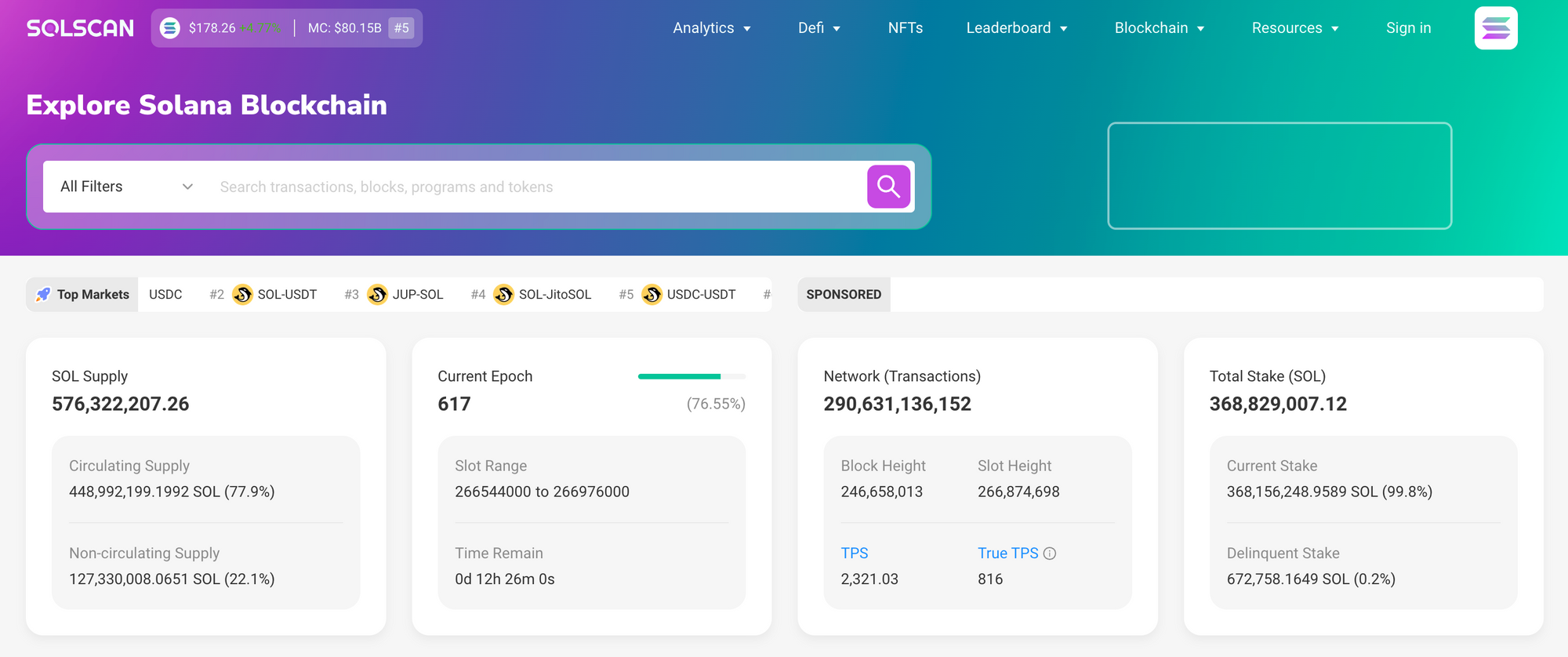
Okay, so check this out—I’ve used many explorers, and one that stands out for its feature depth is solscan. It offers decoded transaction views, NFT metadata, and holder breakdowns all in one place. I like that it’s fast and that the search is forgiving of partial addresses. I’m not endorsing blindly—nope—but for day‑to‑day tracking it’s become my default. Oh, and by the way… the site also surfaces program logs so you can see inner instruction sequences, which is somethin’ I wish I had sooner.
How I use these features in practice: I start with the collection page to scan recent mints and transfers. Next I open suspicious entries in new tabs to inspect the transaction tree and inner instructions. Then I check the wallet history for wash trading patterns or repeated transfers between sibling addresses. Sometimes a short burst of activity means a bot farm is shredding supply; other times it’s a coordinated burn or migration. On one hand, a spike in transfers might point to a whale rotation; on the other hand, it could simply be liquidity harvesting by market makers—contextual clues help, like timestamps lining up with block times and marketplace events.
Here’s a practical checklist I run before I buy or bid. First, confirm the mint authority and recent issuance. Second, verify metadata integrity and where the assets are hosted (Arweave, IPFS, or centralized CDN). Third, scan holder concentration—if 90% of the supply is in three wallets, that’s a red flag. Fourth, inspect recent transaction detail for unusual program calls that suggest wrapped tokens or derivations. Finally, check for associated token accounts and program IDs; those often reveal cross‑program interactions that matter for provenance and future utility.
Advanced Tricks: Following the Money
Short: follow SOL flows. Medium: track both native SOL transfers and token transfers, because many swaps happen via wrapped SOL. Long: use the decoded instruction view to spot swap pairs, verify whether a transfer passed through a DEX (like Serum or Orca) or a proxy program, and then map that to market listings to understand price discovery mechanics when a large holder liquidates.
My process evolves. Initially I looked at single transactions. Then I started grouping related transactions by slot and program. Now I often script watchlists using public RPC nodes to alert me for specific program instructions. I’m not a full‑time dev, though—so I keep things simple: watchlist first, deep dive second. Something I learned the hard way is that alerts without context create noise; you need the decoded instruction and the preceding transactions to see pattern, otherwise you get false positives.
One more neat trick: exported CSVs from an explorer can be fed into a spreadsheet to compute average holding times and churn rates. That helps estimate collectible velocity and gives a feel for the community’s behavior. It’s low tech, but effective. I’m biased toward hands‑on methods like that because they force you to look at raw data rather than trusting charts alone.
FAQ
How do I confirm a token’s provenance?
Check the minting transaction and confirm the program used (commonly Metaplex for Solana NFTs). Then verify metadata URI and the hosting solution. Use the decoded transaction view to ensure the mint authority matches expected patterns, and scan wallet history to see if the token moved through intermediary accounts shortly after minting—those are often signs of automated drops or airdrop consolidations.
Can explorers detect wash trading or floor‑pumping?
They can help. Look for rapid transfers among linked wallets, repeated tiny price increments, or swaps that immediately send proceeds back to related addresses. Holder concentration metrics and transfer timelines usually reveal these patterns. It isn’t foolproof, but combined with social signals it narrows down suspicious activity.
Is it safe to rely on an explorer for buying decisions?
Use them as a tool, not a crystal ball. Explorers give you transparency, which reduces risk, but they don’t replace due diligence on project teams, smart contract audits, or community sentiment. I use explorers to answer “who,” “when,” and “how”—then pair that with other research before committing funds.
Alright—quick wrap up, though I’m not great at neat endings. I’m encouraged by how much visibility modern explorers give us. Yet, somethin’ nags me: the ecosystem needs better indexing of off‑chain metadata and more reliable provenance linking. My instinct says tools will improve fast; and honestly, that excites me. Keep a watchlist, learn to read decoded instructions, and don’t let a smooth UI lull you into skipping the details. The chain tells a story. Read it carefully.